From Coil to Testing Bench: Get the Most Out of Motor Rebuilds
April 15, 2026
Are you needlessly replacing motors?
When a motor fails, the decision isn’t always to replace it. In many cases, a properly executed rebuild can restore performance, extend service life, and cost less than a brand-new motor.
At HECO, motor rebuilding is more than repair. It’s a disciplined, step-by-step process designed to return equipment to OEM or better condition. From coil removal to final testing, every stage plays a role in ensuring long-term reliability.
Learn about the benefits of rebuilds and what to expect from a qualified vendor in the process.
Why Motor Rebuilding Matters
Electric motors are at the core of industrial applications, driving pumps, fans, compressors, and critical process equipment. When they degrade or fail, downtime and lost productivity follow quickly.
A complete motor rebuild offers several advantages, including:
- Extended equipment life without the lead time of new equipment.
- Improved efficiency through updated materials and tighter tolerances.
- Cost savings compared to full replacement.
- Reliability restoration for critical applications.
For many facilities, rebuilding is more than a maintenance decision; it’s a strategic option available to restore uptime and reduce costs.
The Winding Process
One of the most critical steps in a motor rebuild is the rewinding process.
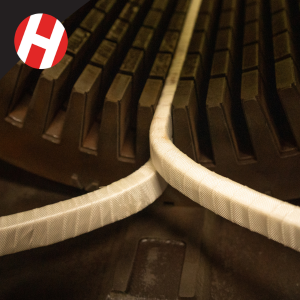
After the original windings are carefully measured and removed, the stator is cleaned, inspected, and prepared for new coils. At this stage, precision matters. The materials selected, including insulation systems, wire type, and varnish, must meet or exceed original specifications.
The winding process includes:
- Designing and forming new coils to exact dimensions.
- Installing insulation systems rated for the application environment.
- Ensuring proper slot fill, spacing, and phase balance.
- Vacuum pressure impregnation (VPI) or equivalent processes to seal and protect the windings.
Producing high-quality rewinds requires meticulous craftsmanship. This level of control helps ensure consistent performance and long-term reliability.
Machine Shop Operations
Rebuilding a motor is not just electrical; it’s mechanical.
Complete restoration of critical components must include:
- Careful measurement of mounting surfaces using calibrated tools.
- Bore alignment to ensure proper clearances and prevent rubbing or uneven wear.
- Shaft repair or fabrication when damage or wear is present.
- Precision machining and finishing to restore components to specification.
- Rotor balancing to eliminate vibration and extend bearing life.
These steps are essential. Even a perfectly rewound motor can fail prematurely if mechanical tolerances are not restored.
Final Testing & Reliability Checks
Before a rebuilt motor leaves the shop, it must undergo a series of performance and quality tests designed to verify reliability.
Depending on the unit specifics, testing may include:
- Electrical testing for insulation resistance and winding integrity.
- High-potential (hipot) testing to ensure insulation strength.
- No-load and load testing to confirm performance characteristics.
- Vibration testing.
- Temperature monitoring to validate thermal performance.
For higher voltage or critical applications, additional testing ensures the motor can perform under real-world operating conditions.
The goal is simple: confidence that the motor will perform as expected from day one.
All Systems Go
A motor rebuild is an opportunity to restore performance, improve efficiency, and extend the life of critical equipment.
HECO combines experienced technicians, in-house manufacturing, and advanced testing capabilities to approach every rebuild with a focus on reliability, precision, and long-term results. By controlling the process from disassembly to final testing, we deliver consistent standards across every rebuild.
Whether you’re dealing with an unexpected failure or planning proactive maintenance, let’s talk about what makes the most sense for your motors, operation, and long-term plans.
Posted in Repair