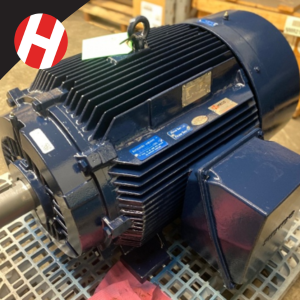
Same HP, Same Ratings, Different Prices? Understanding Electric Motor Cost Factors
August 18, 2026
One of the most common questions we hear at HECO is, “How much does a new electric motor cost?”
The answer is complicated and better reframed as, “What kind of motor are you buying?”
Two motors with the same horsepower rating can differ in price by thousands of dollars. While horsepower is an important specification, it’s only one of many factors that determine the cost, performance, reliability, and expected service life of an industrial motor.
Understanding what drives differences in cost can help you avoid overspending on features you don’t need, or worse, purchasing a motor that isn’t built for your application.
Horsepower Is Only the Starting Point
It’s easy to assume a 100HP motor is the same regardless of who manufactures it. Horsepower defines the motor’s output, but the final cost of a motor depends on a variety of factors.
Beyond horsepower, electric motor pricing is dictated by the unit’s specified:
- Voltage.
- RPM.
- Frame size.
- Mounting configuration.
- Enclosure type.
- Efficiency rating.
- Bearing design.
- Insulation system.
- Shaft modifications.
- Environmental ratings.
In addition to the cost, each specification changes how the motor is built and how it performs in the field.
The Application Drives the Design
One of the biggest pricing factors is where the motor will operate.
For example, a standard TEFC (Totally Enclosed Fan Cooled) motor used in a power generation plant has very different requirements from a motor installed in a chemical processing facility.
An IEEE 841 motor is specifically designed for severe-duty applications such as the petrochemical industry.
Compared to a general-purpose motor, it typically includes:
- Cast iron construction.
- Enhanced sealing systems.
- Improved corrosion resistance.
- Superior bearing protection.
- Tighter vibration tolerances.
- Extended service life expectations.
- Longer warranty timeframes.
These features increase a motor’s cost as well as its reliability in harsh operating environments.
Conversely, installing an IEEE 841 motor inside an enclosed air handling unit may provide little operational benefit while significantly increasing project cost.
The goal is not to buy the “best” motor; it’s to buy the right motor for your application.
Custom Features Add Both Cost and Lead Time
Many industrial motors aren’t ordered directly from a catalog.
Customers frequently require:
- Special shaft extensions.
- Custom flanges.
- Non-standard mounting dimensions.
- Encoder provisions.
- Brake assemblies.
- Special paint systems.
- Space heaters.
- RTDs or vibration sensors.
Each customization adds engineering, manufacturing, and testing requirements. They also increase lead time.
When a motor failure is shutting down production, waiting several additional weeks for custom manufacturing could become a larger cost than the motor itself. Understanding which of your motors are custom-built is important when factoring in replacement cost and may make those particular motors great candidates for a Predictive Maintenance program.
Inexpensive Motors Can Become the Most Expensive
The purchase price is only one component of ownership.
An incorrectly specified motor can create:
- Reduced equipment life.
- Increased maintenance.
- Higher energy consumption.
- More frequent downtime.
- Premature bearing failures.
- Reduced production capacity.
Over the life of the motor, these costs often exceed the difference between two purchase prices. That’s why it’s important to take a holistic view of the motor’s specific application to determine the necessary specifications and capabilities needed for your facility.
Work With Someone Who Understands the Application
Selecting a motor shouldn’t start with a price list. At HECO, the process starts with questions.
As a holistic and experienced vendor, we work to understand what you need in a motor and how it impacts your industrial application, including:
- What equipment is being driven?
- What environment will the motor operate in?
- How critical is its uptime?
- Is efficiency a top priority?
- What lead time can the facility tolerate?
The answers determine which motor provides the greatest long-term value, not simply the lowest upfront cost.
But we don’t stop there.
The HECO Process goes a step further to ask about the motor being replaced. We want to know what caused it to fail in order to suggest and price a replacement motor – and sometimes even a Repair – that won’t have the same issue and stop the failure from occurring again.
All Systems Go
Beyond the price tags, two motors with identical ratings may be engineered for completely different operating environments, reliability expectations, and service lives.
Understanding those differences before purchasing can help avoid unnecessary costs, improve equipment reliability, and ensure the motor performs as intended throughout its lifecycle.
Whether you’re specifying a motor for a new installation or replacing an existing unit, HECO can help evaluate your application and recommend the right solution. Contact us to discuss your current issues and goals. We’ll explain your options and how we can help you select the right motor based on your application, the total cost of ownership, and reliability.
Posted in Product Sales